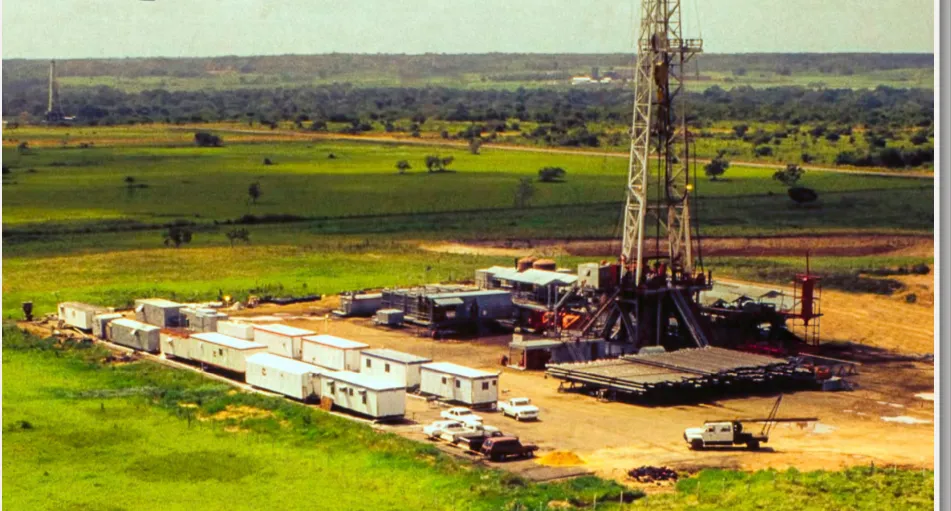
The GMB's criticism of the Labour Party’s 2016 conference decision to ban shale gas fracking has been widely quoted in the press, with an assumption that this is representative of the wider trade union position.
The GMB’s Scotland secretary, Gary Smith, said it was “not ethical” and an “abdication of our environmental and moral responsibilities” to become increasingly reliant on gas from dictatorial regimes overseas (although most of our gas imports come from Norway).
Yet the GMB is the only major UK trade union to actively support fracking in the UK, which is opposed by Unite, Unison, PCS, Prospect, the Fire Brigades Union (FBU), the Universities and Colleges Union (UCU), among others, as part of their wider commitments to tackle climate change, move away from fossil fuels, and protect the environment (see details below)
Unions have not only taken on board the climate change impacts of shale gas industry, but recognise the serious issues for worker safety and doubts over the industry’s claims of a jobs bonanza.
In July last year, Howard Davies, chair of the Airports Commission, wrote a official letter to Lord Deben, reassuring him that Heathrow expansion would not prevent the UK meeting our legally binding climate targets. The letter explains that "carbon emissions were treated as a constraint, not an output". Or as the more cynical among us might translate this, the answer was predetermined and then numbers inserted into the model that would give the the right answer, realistic or not.
Having waited for months for the government to publish a statutory report by the Committee on Climate Change (CCC) on the impact of fracking on the UK's legally binding climate targets, campaigners suspected that it was not favourable to the government's "all-out for shale" policy. Some of the more cynical among us may have expected it on 6th July, on the day of the even-more-long-awaited Chilcot report into the Iraq war. In fact the report was finally released on the morning of 7th July.
The financial threat to Tata Steel’s British operations has put 40,000 jobs on the line. Yet these jobs and this industry should be central to the creation of a sustainable economy.
As the World Steel Association has pointed out:
“Every part of a wind turbine depends on iron and steel... steel holds the blades in place as they turn, using a cast iron or forged steel rotor hub... Steel’s strength makes it ideal for the nacelle’s frame, housing and machinery... About 90% of all wind turbine towers are tubular steel towers.”
Ken Montague, Secretary of the Campaign against Climate Change Trade Union Group said today
“There is nothing a government hates more than to be well informed; for it makes the process of arriving at decisions much more complicated and difficult.”
This quote from John Maynard Keynes was used in a recent editorial in the BMJ arguing that the UK’s planned new anti-lobbying clause, by muzzling scientists will jeopardise evidence informed policy making in public health. The potential impacts are just as concerning for other areas including energy policy.
In the new clause all organisations in receipt of state grants would have to agree, as a very broad legal condition, not to use public money to influence MPs or political parties, attempt to influence legislation or regulatory action, or press for the renewal of contracts and grants.
The 'Heathrow 13' who blocked the north runway at Heathrow in July 2015 to protest against the climate folly of a third runway have been told they are likely to face prison, because of the 'astronomical cost' of their actions - 25 flights cancelled. And yet the aviation sector continues to get off scott-free despite the astronomical cost of its own contribution to climate change.
In 2015 Britain has seen repeated flooding causing large-scale damage. Tens of thousands of people have had to evacuate their homes, suffered days without power and seen their homes and businesses destroyed as storms repeatedly hit the country. In the latest bout of flooding, thousands of people in Manchester, Leeds and York have been hit, sometimes with the worst floods ever, as rivers broke banks.
In Salford, Greater Manchester, the local news magazine, The Salford Starreported that residents had had almost no notice of the floods. People complained that flood gates failed to work after they hadn’t been properly re-fitted following repair work on the estates.
David Cameron has expressed sympathy with victims, and celebrated the work of the emergency workers. But his government’s policies have made the situation far worse. Back in 2011, the then Tory-Liberal coalition government announced an 8 percent cut (£540 million) in spending on flood defences. Government policies that favour the fossil fuel industry, such as fracking, will only increase emissions leading to further climate change and more frequent floods.
Trade unions that represent workers in the emergency services have repeatedly warned of the impacts of austerity measures on their ability to deal with flooding and other severe weather.
The climate deal agreed by world leaders in Paris this week is being heralded as a historic deal which has set the world on track to avoid catastrophic climate change.
This is by no means what has happened.
What is true is that world leaders have been under pressure from a growing global climate movement and community of scientists who have successfully raised awareness of both the issue and the need for serious and urgent action.
To some extent whatever positives there are in the agreement are a reflection of this pressure. The headline grabbing desire "to pursue efforts to limit temperature rises to below 1.5 degrees" reflects the campaigning of many in the poorest parts of the world that have rightly argued that 2 degrees warming seals their fate. For many years their campaigning slogan has been 1.5 to stay alive!
It's important that we recognise the impact of protest and pressure on the talks. However there will be and should be no complacency from the movement in the wake of the Paris agreement.
The deal is historic only in so far as it underlines what the movement has been arguing for years. That there is an urgent and real threat to the climate which will have catastrophic consequences.
But that threat still remains because the Paris talks have done absolutely nothing to prevent it or begin to tackle it.
The climate deal agreed by world leaders in Paris this week is being heralded as a historic deal which has set the world on track to avoid catastrophic climate change.
This is by no means what has happened.
What is true is that world leaders have been under pressure from a growing global climate movement and community of scientists who have successfully raised awareness of both the issue and the need for serious and urgent action.
To some extent whatever positives there are in the agreement are a reflection of this pressure. The headline grabbing desire "to pursue efforts to limit temperature rises to below 1.5 degrees" reflects the campaigning of many in the poorest parts of the world that have rightly argued that 2 degrees warming seals their fate. For many years their campaigning slogan has been 1.5 to stay alive!
It's important that we recognise the impact of protest and pressure on the talks. However there will be and should be no complacency from the movement in the wake of the Paris agreement.
The deal is historic only in so far as it underlines what the movement has been arguing for years. That there is an urgent and real threat to the climate which will have catastrophic consequences.
But that threat still remains because the Paris talks have done absolutely nothing to prevent it or begin to tackle it.